5 MOTHER SAUCE

The Origins of Sauce in European Cuisine

Before the concept of mother sauces existed, sauces had already been used since the Roman era. One famous example is garum, a fermented fish sauce that was extremely popular in the Roman Empire.

Sauces were not yet structured. They were mainly used to mask the taste of food (especially less fresh meat). There were no standardized techniques
A major development occurred during the Middle Ages to the Renaissance in France, when royal kitchens evolved and cooking techniques became more complex.

The Era of the French Culinary Revolution
A significant transformation took place between the 17th and 19th centuries in France, which was the center of the culinary world at the time.

The Role of Marie-Antoine Carême (1784–1833)
Carême is known as the “King of Chefs and the Chef of Kings.”
His contributions:
The first to classify sauces systematically
Developed the concept of “grandes sauces” (mother sauces)
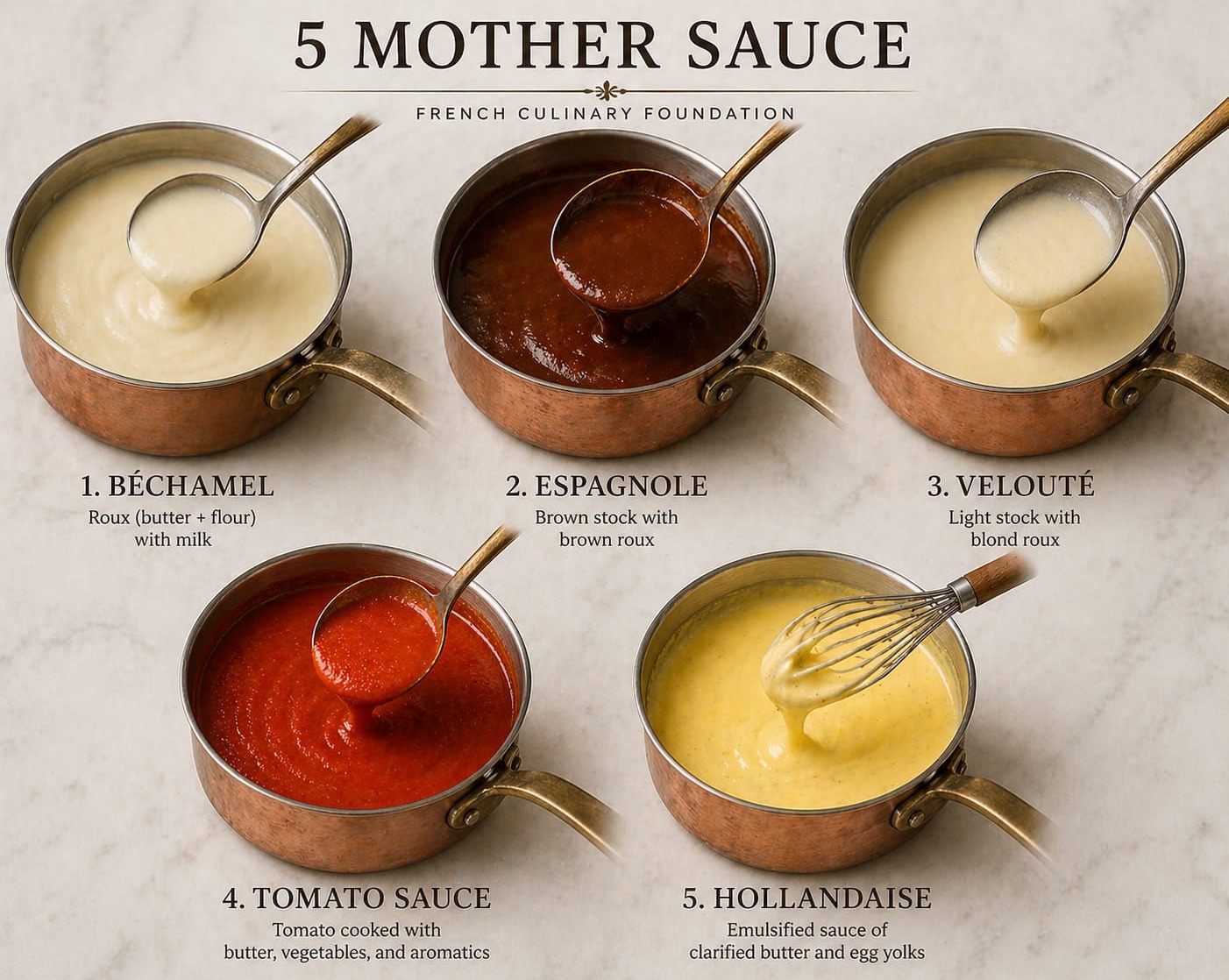
Mobirise Website Builder

BECHAMEL

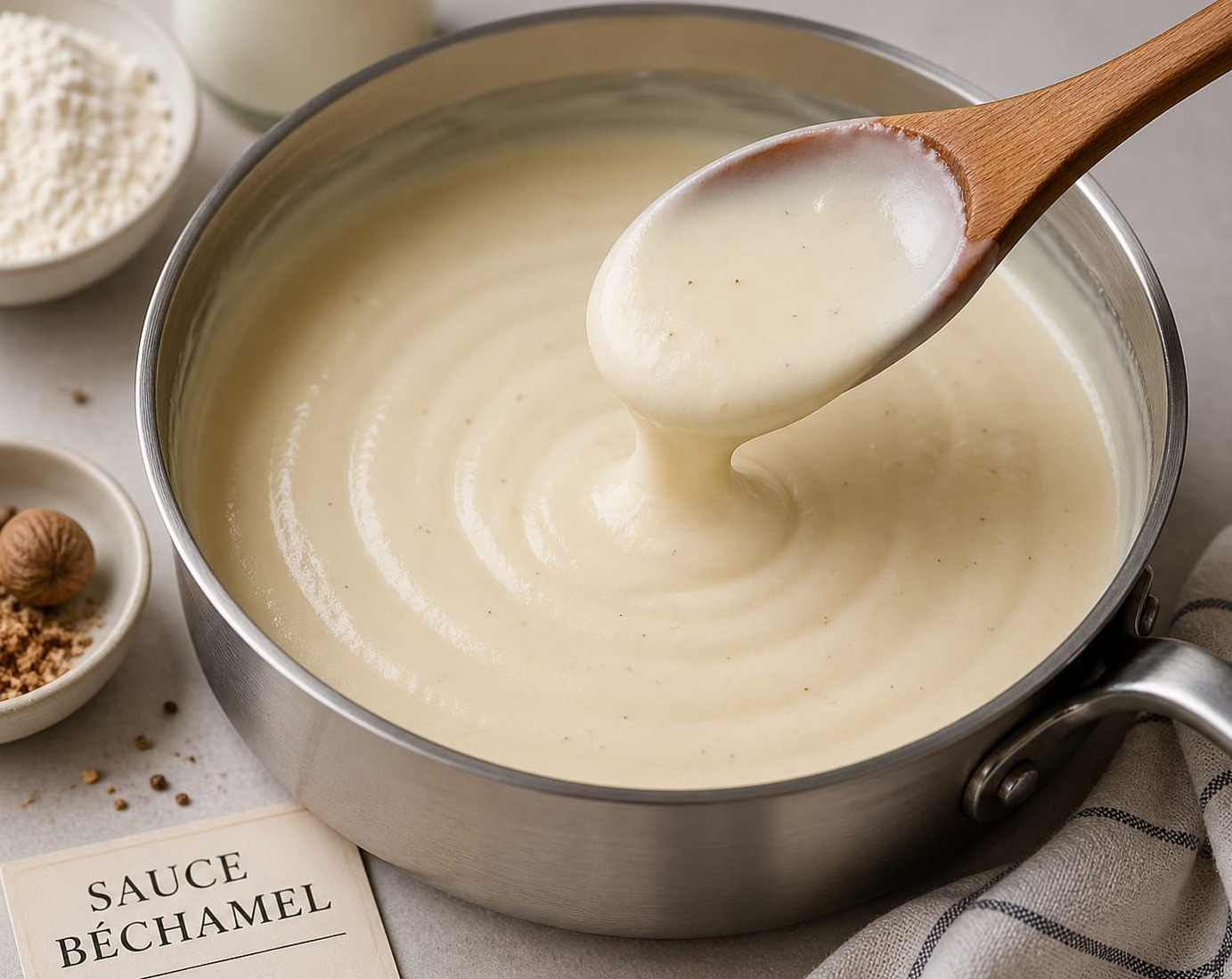
Béchamel sauce is one of the five mother sauces in classical French cuisine. It is known for its smooth texture, white color, and is made from a mixture of roux (butter + flour) and milk.
The name “béchamel” comes from a French nobleman, Louis de Béchameil, who served as maître d'hôtel (head steward) in the court of King Louis XIV in the 17th century. However, there is debate about whether he actually invented the sauce or simply popularized it.
Earlier Roots (Italy)
Before becoming known in France, a similar sauce existed in Italy called “salsa colla” (glue sauce), used during the time of Catherine de Medici. When she married into the French royal family, many Italian culinary techniques were introduced into French cuisine.
Development in France
In France, the sauce was refined by royal chefs and became widely known. Early recipes were more complex, often including stock and cream, but over time they were simplified into the basic combination: milk + butter + flour

Codification by Classical Chefs
In the 19th century, Marie-Antoine Carême classified béchamel as a mother sauce. Later, Auguste Escoffier refined the system and made it a standard in modern culinary practice.


⁠Béchamel Sauce (White Sauce)

Ingredients:
2 tbsp butter
2 tbsp flour
500 ml milk
Salt and pepper

Instructions:

1.⁠ ⁠Melt the butter in a pan.
2.⁠ ⁠Add flour and cook (roux) for 1–2 minutes.
3.⁠ ⁠Gradually add milk while whisking.
4.⁠ ⁠Cook until thick and smooth.
5.⁠ ⁠Season with salt and pepper.

Mobirise Website Builder

HOLLANDAISE

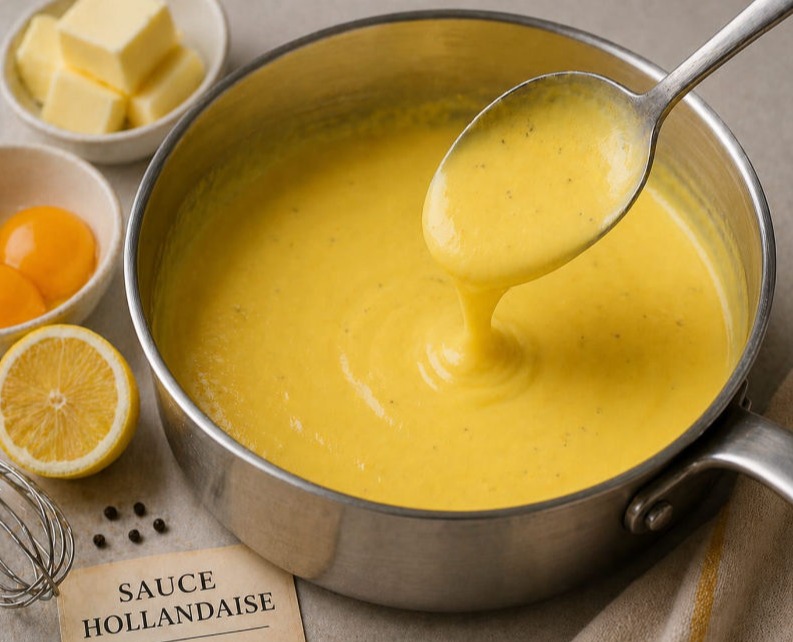
Hollandaise sauce is one of the five mother sauces in classical French cuisine. Although its name means “Dutch sauce,” its origins are closely tied to the development of French culinary traditions.

Why is it called “Hollandaise”?
The name “Hollandaise” (meaning “Dutch”) began to be used in the 17th century. There are several theories:

During wars between France and the Netherlands, the supply of French butter was disrupted, so the French used imported Dutch butter. It may have been named in honor of the high-quality butter from the Netherlands at that time. Since then, the sauce has been known as Hollandaise.

Development in French Cuisine
In the 19th century, the legendary chef Marie-Antoine Carême began classifying foundational sauces, including Hollandaise. Later, Auguste Escoffier refined the system and officially established Hollandaise as one of the five mother sauces in classical French cuisine.

Ingredients:
3 egg yolks
150 g melted butter
1 tbsp lemon juice
Salt

Instructions:
1.⁠ ⁠Whisk egg yolks with lemon juice over low heat (double boiler).
2.⁠ ⁠Slowly add melted butter while whisking.
3.⁠ ⁠Continue whisking until thick and creamy.
4.⁠ ⁠Season with salt.


Mobirise Website Builder

VELOUTE

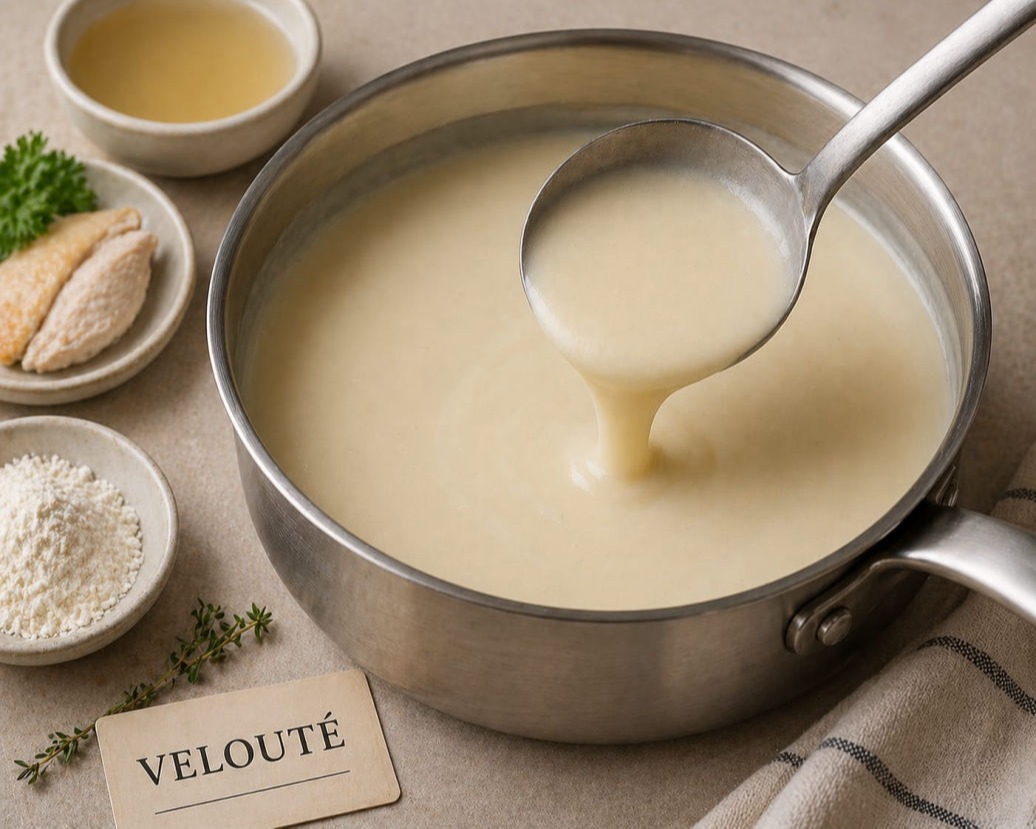
Velouté sauce is one of the five classical mother sauces in French cuisine, systematically developed during the classical culinary era.

Origin velouté became known between the 17th and 18th centuries in France, when cooking techniques began to be standardized in royal kitchens and among the aristocracy. The word velouté comes from French, meaning “velvety”, describing its smooth and silky texture.

Development by Culinary Figures
The concept of velouté was formalized by Marie-Antoine Carême in the early 19th century. He classified it as one of the foundational sauces of haute cuisine.

Later, Auguste Escoffier refined the system in his book Le Guide Culinaire, officially establishing velouté as one of the five mother sauces alongside béchamel, espagnole, tomato, and hollandaise.

Basic Characteristics
Velouté is made from:
Roux (butter and flour)
Light stock (chicken, fish, or veal stock)


Unlike heavier sauces, velouté has a light, delicate, and elegant flavor, making it an ideal base for many derivative sauces.

Role in Culinary Arts
Over time, velouté became the base for many sauces, such as:
Sauce suprême (from chicken velouté)
Sauce allemande
Sauce bercy (for fish)

Velouté Sauce
Ingredients:
2 tbsp butter
2 tbsp flour
500 ml stock (chicken, fish, or veal)
Salt and pepper

 Instructions:
1.⁠ ⁠Melt butter and add flour (make a blond roux).
2.⁠ ⁠Gradually add stock while whisking.
3.⁠ ⁠Simmer until smooth and slightly thick.
4.⁠ ⁠Season to taste.
Mobirise Website Builder

ESPAGNOLE

he name Espagnole means “Spanish,” but the sauce actually originates from France. There are several theories about its name:

One story says that in the 17th century, during the marriage of King Louis XIII and Anne of Austria (from Spain), royal chefs added Spanish ingredients like tomatoes to French brown sauce. Since then, it was called Espagnole.
Another theory suggests the name was simply used to give an exotic and luxurious impression, rather than indicating a true Spanish origin.

Development in Classical Cuisine
In the 19th century, Marie-Antoine Carême classified Espagnole as one of the mother sauces. Later, Auguste Escoffier refined the recipe and standardized it in modern French cuisine.

Characteristics of Espagnole Sauce
This sauce is known for:
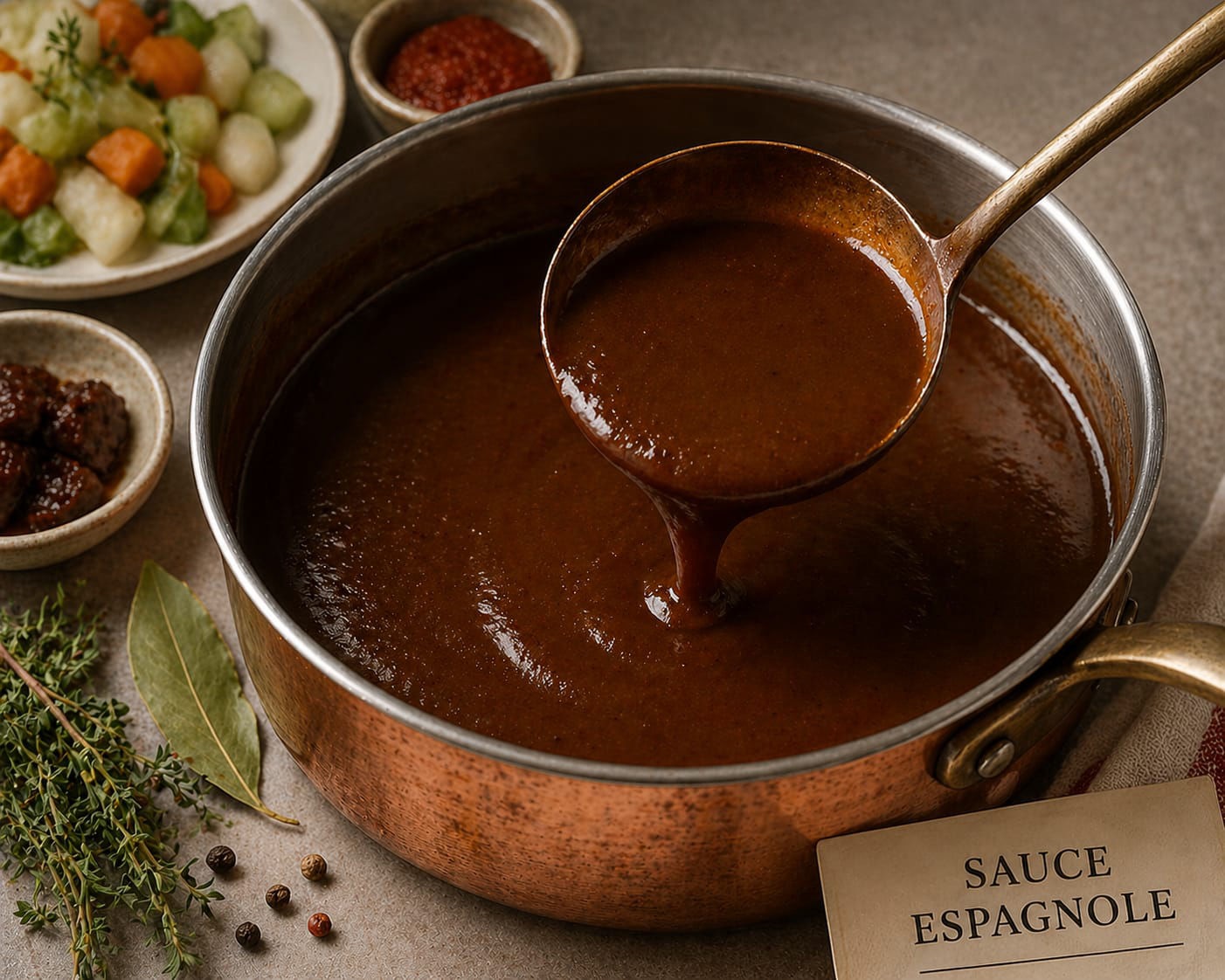
Dark brown color
Rich, deep, and complex flavor
Thick texture

Its main ingredients typically include:
Brown stock (usually from beef bones)
Mirepoix (carrots, onions, celery)
Brown roux (flour and butter cooked until brown)
Tomato paste
Herbs such as bay leaf and thyme

Role in Cooking
Espagnole is rarely served on its own. Instead, it is used as a base for derivative sauces such as:
Demi-glace
Bordelaise sauce
Chasseur sauce

TOMATO SAUCE

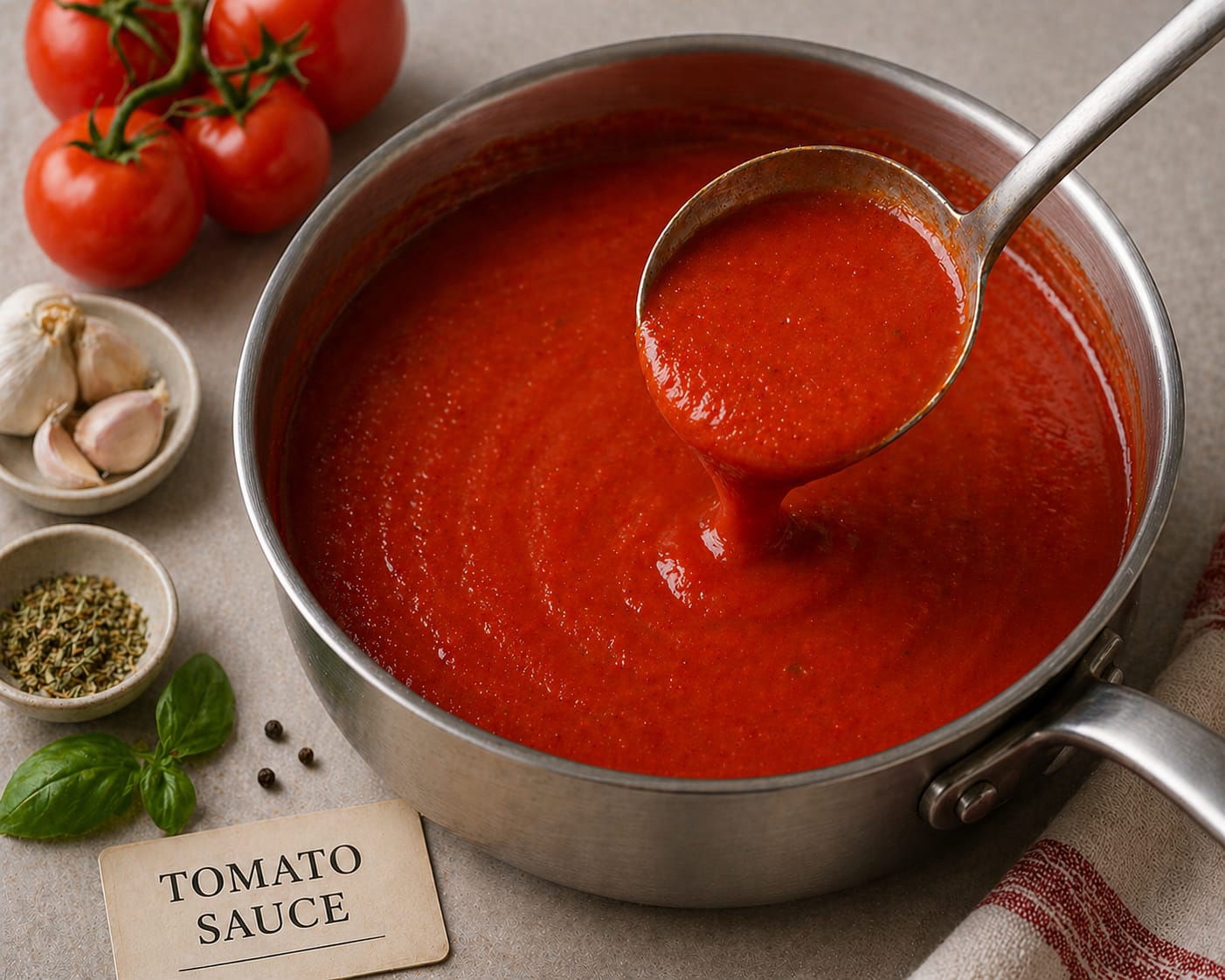
The tomato sauce we know today has a long and unique history—even originally, it did not contain tomatoes at all.

Early Origins (Asia, 17th Century)
The word “ketchup” (or tomato sauce) comes from the Chinese term ke-tsiap (or kê-chiap), which referred to a fermented fish sauce. This sauce was popular in Southeast Asia and China and was typically made from salted fish, soybeans, and spices—without tomatoes.

Arrival in Europe (18th Century)
British sailors brought the concept of this sauce to Europe. There, people began experimenting with their own versions using ingredients such as:
Mushrooms
Walnuts
Oysters

Tomatoes were not used yet because they were considered poisonous in Europe at the time.
Introduction of Tomatoes (Late 18th – Early 19th Century)Tomatoes gradually became accepted as food in Europe and America. One of the earliest tomato sauce recipes was recorded in 1812 by an American scientist named James Mease. His version included tomatoes, spices, and brandy—without vinegar or sugar as used today.

Development in America (19th Century)
Tomato sauce became popular in the United States, but its quality was inconsistent because it spoiled easily. To solve this, producers began adding preservatives.

A major breakthrough came when Henry John Heinz, founder of the H. J. Heinz Company, developed a tomato sauce recipe in 1876. He added:

Vinegar (as a natural preservative)
Sugar
Spices

This recipe made the sauce longer-lasting and gave it the sweet-and-tangy flavor we recognize today.

Modern Tomato Sauce
Since then, tomato sauce (or ketchup) has become one of the most popular sauces in the world. Today, it is used in many dishes such as:
French fries
Burgers
Pasta
Pizza

Tomato Sauce
Ingredients:
2 tbsp olive oil
2 cloves garlic
500 g tomatoes (fresh or canned)
Salt, pepper, herbs (basil/oregano)
 
Instructions:
1.⁠ ⁠Heat oil and sauté garlic.
2.⁠ ⁠Add tomatoes and cook over medium heat.
3.⁠ ⁠Simmer until thick.
4.⁠ ⁠Add herbs, salt, and pepper.


Mobirise Website Builder

Contacts

Phone

0878-2555-0000

Email

infoknowldgekitchen@gmail.com

Instagram

@sku.d.flamma

Address

Jl. Dr. Setiabudi No.186, Hegarmanah, Kec. Cidadap, Kota Bandung, Jawa Barat 40141, Indonesia

Working Hours

Saturday - Sunday : 09.00 - 12.00

Free AI Website Builder