Moist Heat

Steaming

Explanation:

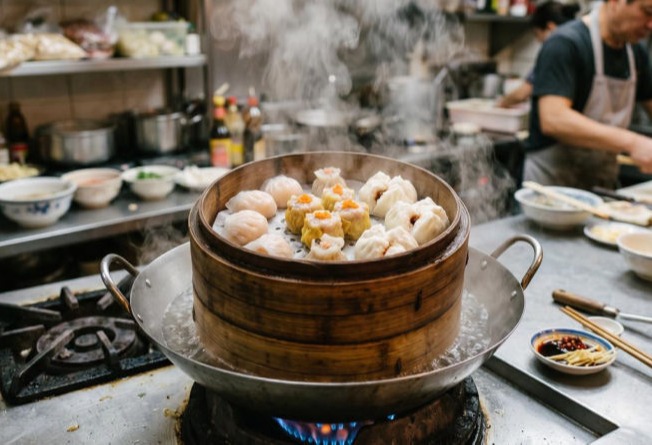
Steaming cooks food using water vapor rather than direct contact with liquid, by placing the food above boiling water. Heat is transferred when steam condenses on the food’s surface, providing gentle and even cooking without agitation. Because the food never touches water, it retains more nutrients, natural flavor, and color compared to other moist-heat methods. The environment stays moist but not diluted, making it ideal for delicate ingredients. This method emphasizes purity of flavor and minimal structural damage.

Characteristics:

- Very moist and tender
- Natural color and flavor preserved
- No dilution from water

Suitable foods:

- Vegetables (broccoli, carrots)
- Fish
- Dumplings
Mobirise Website Builder
Boiling

Explanation:

Boiling involves cooking food fully submerged in water at 100°C with vigorous bubbling, where strong convection currents constantly move the liquid. This intense movement allows fast heat transfer but can also cause fragile foods to break apart. Because of full submersion, flavors and nutrients may leach into the water, especially over longer cooking times. It is one of the most aggressive moist-heat methods and is best used when speed is more important than delicacy. Control is limited compared to gentler techniques.

Characteristics:

- Fast and efficient cooking
- Can soften or break apart food
- Possible flavor loss into water

Suitable foods:

- Pasta, noodles
- Potatoes
- Eggs

Mobirise Website Builder
Simmering

Explanation:

Simmering cooks food in liquid just below boiling, typically around 85–95°C, where only small bubbles rise gently to the surface. This reduced movement prevents damage to the food while still allowing consistent heat transfer. It is particularly effective for extracting and developing flavors over time without clouding the liquid excessively. Compared to boiling, simmering offers greater control and preserves the structure of ingredients. It is commonly used when balance between tenderness and clarity is important.

Characteristics:

- Gentle cooking with minimal agitation
- Tender but intact texture
- Gradual flavor development

Suitable foods:

- Soups and broths
- Legumes
- Tough cuts for slow cooking

Mobirise Website Builder
Poaching

Explanation:

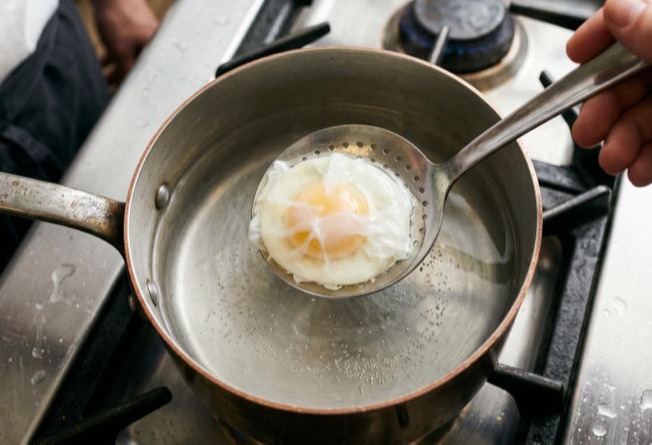
Poaching uses liquid at a low temperature (around 65–80°C) with little to no visible movement, creating a very calm cooking environment. This prevents proteins from tightening too quickly, resulting in a soft, delicate texture. The liquid may be lightly flavored, allowing subtle infusion without overpowering the food. Because the temperature is low, no browning occurs, and the focus is entirely on preserving tenderness. Precision is crucial, as even slight overheating can change the texture significantly.

Characteristics:

- Very delicate and soft texture
- Smooth, unbrowned surface
- Mild, subtle flavor

Suitable foods:

- Eggs
- Fish fillets
- Chicken breast

Mobirise Website Builder
Sous Vide

Explanation:

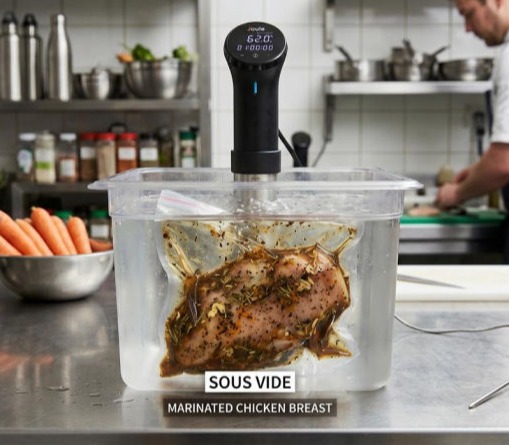
Sous vide cooks food sealed in a vacuum bag in a precisely controlled water bath, often at temperatures lower than traditional methods. The sealed environment prevents moisture and flavor loss, while the exact temperature ensures the food cooks evenly from edge to center. Unlike other moist methods, there is no risk of overcooking if time is controlled properly. The process is slow but highly accurate, producing consistent and repeatable results. It is widely used in modern cooking for precision and texture control.

Characteristics:

- Extremely even doneness
- Very juicy and tender
- No dilution or moisture loss

Suitable foods:

- Steak, chicken
- Fish
- Eggs

Mobirise Website Builder
 Stewing

Explanation:

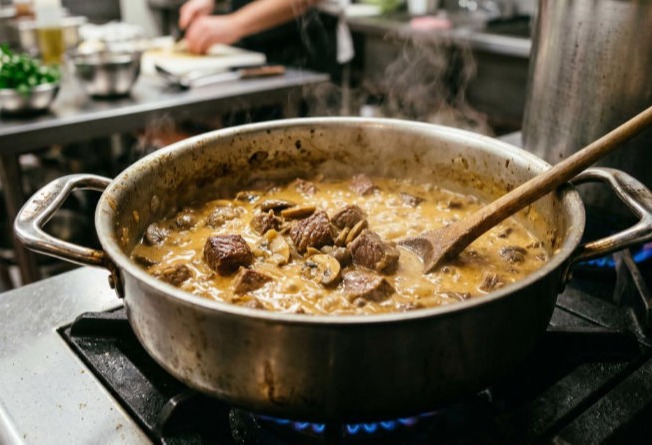
Stewing involves cooking small pieces of food fully submerged in liquid over a longer period, allowing flavors to blend deeply. The small size of the ingredients ensures even cooking and efficient heat penetration. As the cooking progresses, connective tissues break down and the liquid thickens naturally from released gelatin and starches. The liquid is not discarded but becomes part of the final dish, carrying concentrated flavor. This method is ideal for creating rich, cohesive dishes.

Characteristics:

- Thick, flavorful sauce
- Very tender small pieces
- Integrated, rich taste

Suitable foods:

- Beef stew
- Chicken stew
- Vegetables in sauce

Mobirise Website Builder
BRAISING

explanation:

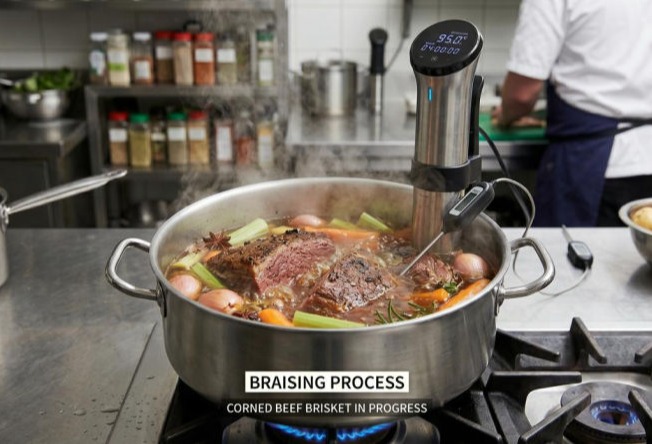
Braising begins with searing food at high heat, then cooking it slowly in a small amount of liquid with partial submersion. This combination allows both surface browning and gentle moist cooking to occur. The initial searing develops deep flavor, while the slow cooking phase breaks down tough fibers into a tender texture. Because the food is not fully submerged, both the liquid and exposed surface contribute to the final result. This method is especially effective for larger, tougher cuts of meat.

Characteristics:

- Deep, complex flavor
- Fork-tender texture
- Rich cooking liquid with developed taste

Suitable foods:

- Short ribs
- Lamb shanks
- Chicken thighs
Mobirise Website Builder

Contacts

Phone

0878-2555-0000

Email

infoknowldgekitchen@gmail.com

Instagram

@sku.d.flamma

Address

Jl. Dr. Setiabudi No.186, Hegarmanah, Kec. Cidadap, Kota Bandung, Jawa Barat 40141, Indonesia

Working Hours

Saturday - Sunday : 09.00 - 12.00

Website Software