Dry Heat Explanation

BAKING

Explanation:

Baking is a method of cooking that uses indirect dry heat in an enclosed environment, typically an oven, where heat is transferred through convection (hot air circulation) and radiation from the oven walls. The temperature is usually moderate and stable, allowing food to cook evenly from the outside toward the center. This method is especially important for foods that require structural development, such as doughs and batters, where heat causes proteins to coagulate and starches to gelatinize. Moisture inside the food is gradually converted into steam, contributing to expansion and tenderness. Because the heat is not aggressive, baking is ideal for controlled, consistent cooking rather than rapid browning.


Characteristics:

- Even internal cooking
- Soft, tender structure
- Light to moderate browning

Suitable foods:

- Bread, cakes, pastries
- Custards, casseroles
- Fish and poultry
Mobirise Website Builder
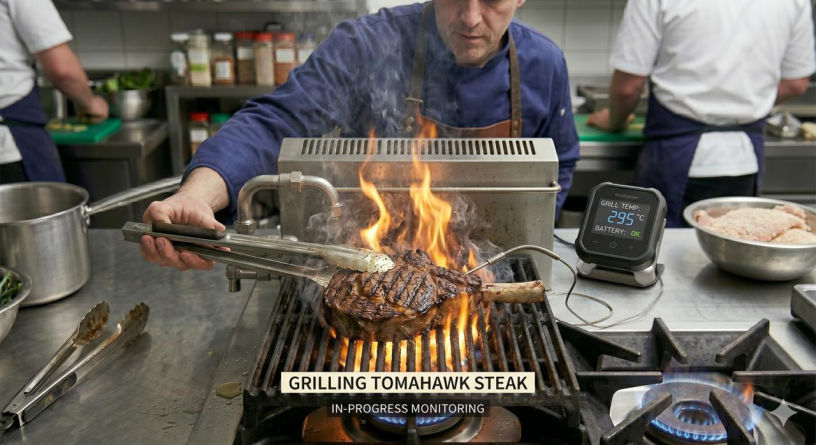
GRILLING

Explanation:

Grilling involves cooking food using direct, high heat, usually from below, which creates intense surface contact with heat. The high temperature rapidly triggers the Maillard reaction, forming a flavorful crust and distinctive grill marks. Because of the intensity, grilling cooks food quickly while often leaving the interior juicy, especially if done properly. The open environment also allows fat to drip away, sometimes producing smoke that enhances flavor. Control of distance from heat and timing is critical to prevent burning while achieving proper doneness.

Characteristics:

- Charred, smoky flavor
- Crisp, caramelized exterior
- Juicy interior if not overcooked

Suitable foods:

- Steaks, chicken, seafood
- Burgers and sausages
- Firm vegetables

Mobirise Website Builder

ROTISSERIE


Explanation:

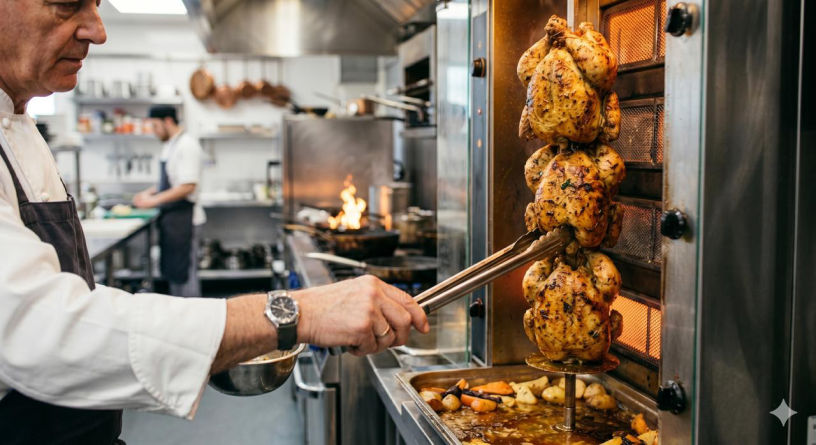
Rotisserie cooking uses a rotating spit mechanism to slowly turn food in front of or above a heat source. This constant rotation allows the food to cook evenly on all sides while its own fat and juices continuously baste the surface. The self-basting effect helps prevent dryness and enhances flavor development over time. Heat exposure is moderate and consistent, making it ideal for larger cuts that require longer cooking durations. The movement also reduces the risk of uneven cooking or burning on one side.


Characteristics:


- Even browning on all surfaces

- Juicy and flavorful interior

- Crispy, well-rendered outer layer


Suitable foods:


- Whole chickens

- Large cuts of beef or pork

- Lamb


Mobirise Website Builder
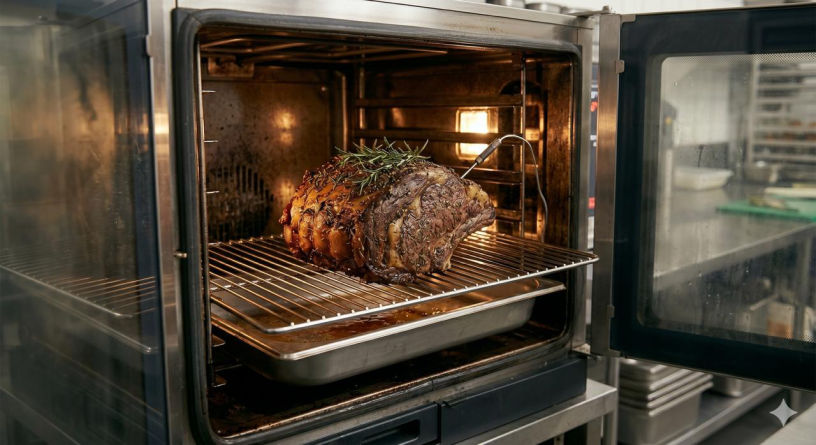
ROASTING

Explanation:

Roasting is a dry-heat method performed in an oven, typically at higher temperatures than baking, and is often used for solid, structured foods. The goal is to develop a deeply browned exterior through the Maillard reaction while maintaining a moist and tender interior. Unlike baking, roasting emphasizes flavor concentration through moisture loss and surface caramelization. The uncovered environment allows heat to directly impact the surface, enhancing texture contrast. It is commonly used for meats and vegetables that benefit from strong, developed flavors.

Characteristics:

- Deep browning and rich flavor
- Crisp exterior, tender inside
- Concentrated taste

Suitable foods:

- Whole poultry, beef, lamb
- Root vegetables
- Potatoes


Mobirise Website Builder
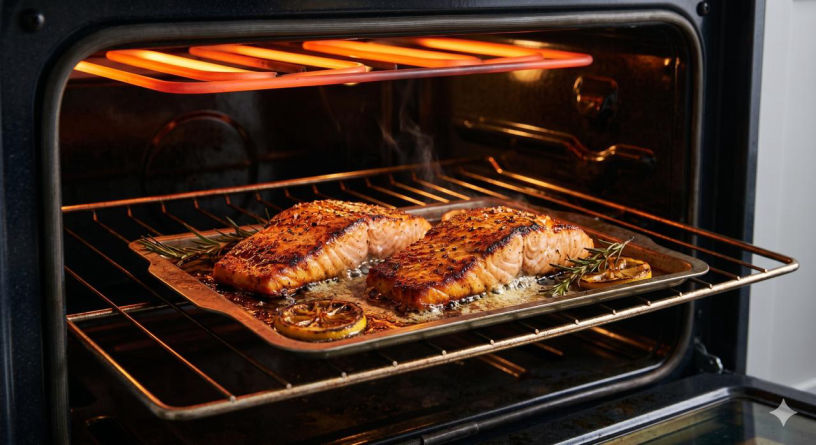
BROILING

Explanation:

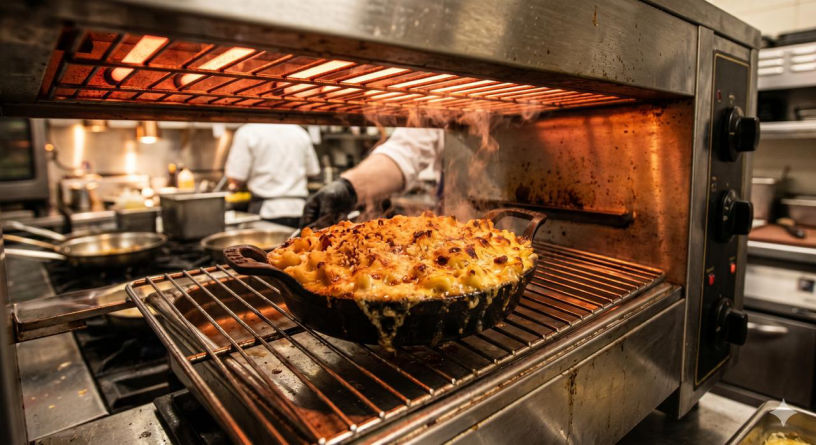
Broiling exposes food to intense direct heat from above, usually from an oven’s top heating element or a salamander. The heat is extremely high and acts quickly, making this method suitable for thin or already partially cooked foods. Because the energy is concentrated on the surface, it rapidly creates browning and slight charring. Timing and positioning are crucial, as food can burn easily under such intense heat. Broiling is often used as a finishing technique to enhance color and texture.

Characteristics:

- Fast surface browning
- Slight charring or crust formation
- Minimal internal cooking if done briefly

Suitable foods:

- Thin cuts of meat
- Fish fillets
- Cheese-topped dishes


Mobirise Website Builder
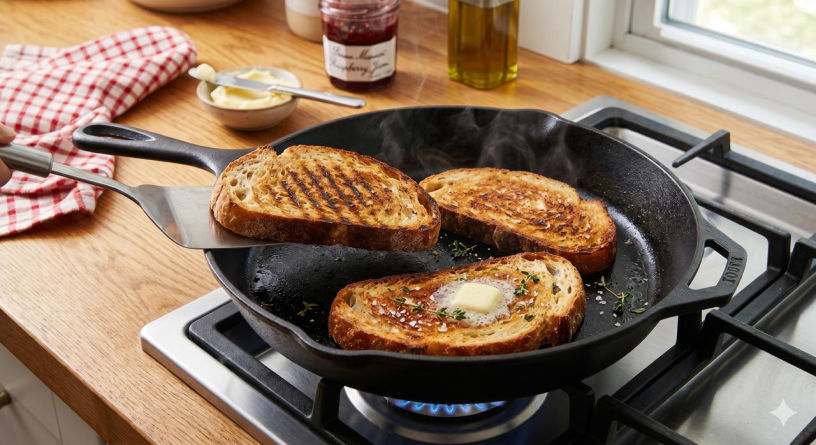
TOASTING

Explanation:

Toasting is a dry-heat method that focuses on surface browning through direct radiant heat, often at relatively short cooking times. It enhances flavor by driving off moisture and initiating both caramelization and the Maillard reaction. The process transforms soft or raw textures into crisp and aromatic ones. Unlike other methods, toasting is usually shallow and does not aim to cook food through completely. It is often used to enhance aroma and texture rather than fully cook.

Characteristics:

- Crisp and dry texture
- Golden-brown color
- Enhanced aroma and flavor

Suitable foods:

- Bread and baked goods
- Nuts and seeds
- Spices


Mobirise Website Builder
GRATINATING

Explanation :

Gratinating is a finishing technique that uses very intense overhead heat, typically from a salamander, to brown or melt the surface of a dish. It is essentially a controlled form of broiling, designed specifically to create a golden crust, often involving cheese, cream, or breadcrumbs. The process is quick and focuses only on the top layer, leaving the interior largely unchanged. It enhances both visual appeal and texture by adding a crispy, caramelized topping. This method is widely used in professional kitchens for plating and finishing dishes.

Characteristics :

- Golden, bubbly crust
- Crisp top layer
-  Rich, slightly caramelized flavor

Suitable foods : 

- Gratins and casseroles
- Pasta dishes (lasagna)
- Cream-based preparations
Mobirise Website Builder

Contacts

Phone

0878-2555-0000

Email

infoknowldgekitchen@gmail.com

Instagram

@sku.d.flamma

Address

Jl. Dr. Setiabudi No.186, Hegarmanah, Kec. Cidadap, Kota Bandung, Jawa Barat 40141, Indonesia

Working Hours

Saturday - Sunday : 09.00 - 12.00

HTML Maker